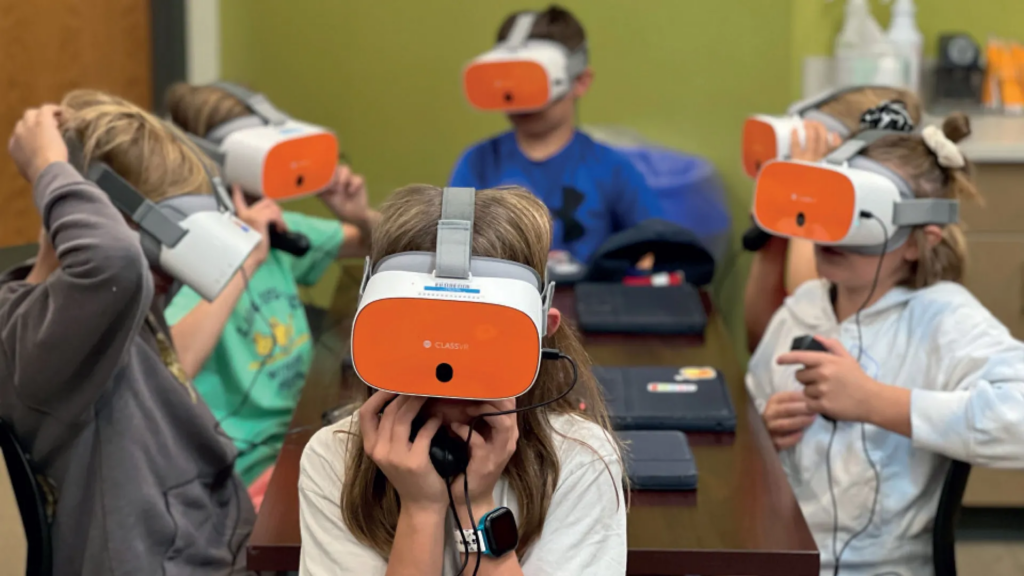
Assisted technology-supported inclusion is all about making learning easier and more accessible for everyone. Universal Design for Learning (UDL) focuses on designing tools and lessons so all students can use them from the start, and many technologies today include helpful features like captions and voice tools, although some can still be confusing to use. Tools like screen readers and text-to-speech are really useful because they help students who have trouble seeing or reading by turning text into audio. Immersive learning like VR and AR also makes learning more engaging by letting students experience things in a more interactive way, which can help them understand better. Overall, these technologies not only improve accessibility but also make learning more interesting, collaborative, and personalized for different students.
I also looked into specific tools like text-to-speech and adaptive keyboards. Text-to-speech tools read text out loud, which can really help students who struggle with reading or have learning disabilities by making content easier to understand. Adaptive keyboards are designed for people who have difficulty using standard keyboards, with features like larger keys or customized layouts to make typing easier. Both of these tools show how technology can be adjusted to meet different needs and make learning more inclusive for everyone.
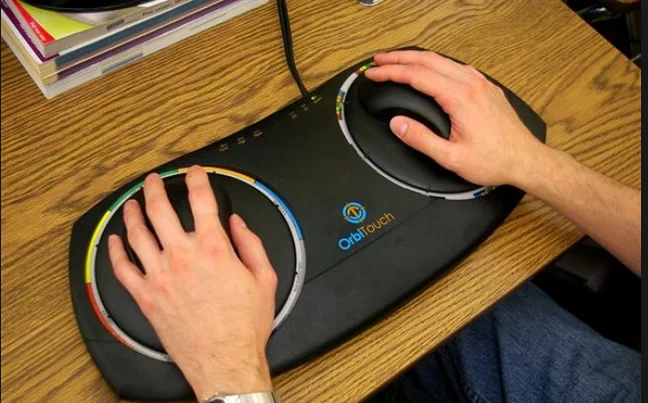
The keyboard above is an adaptive keyboard designed to help people with limited mobility use a computer more easily. It has large touchpads and simplified controls, making it easier for users to navigate and interact without needing a traditional keyboard.
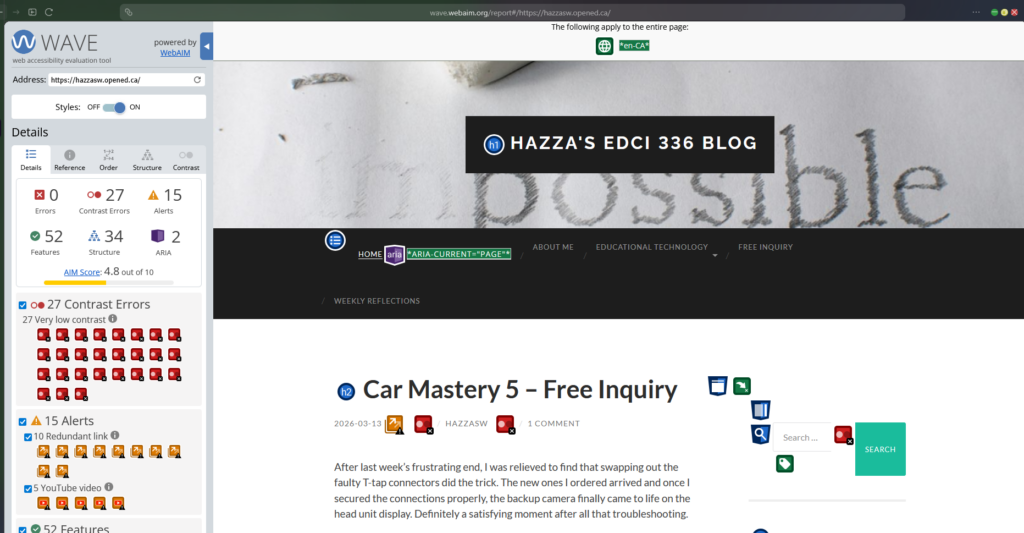
We also talked about web accessibility in class and used the WAVE tool to check how accessible different websites are. I tested my own website and got a score of 4.8, which showed me that while it’s somewhat accessible, there are still improvements I can make to make it better for all users.
Hazza, thank you for reinforcing the importance of inclusion through accessibility. The tools are a great way to help us ensure that Universal Design for Learning remains practical and at the heart of everything digital.